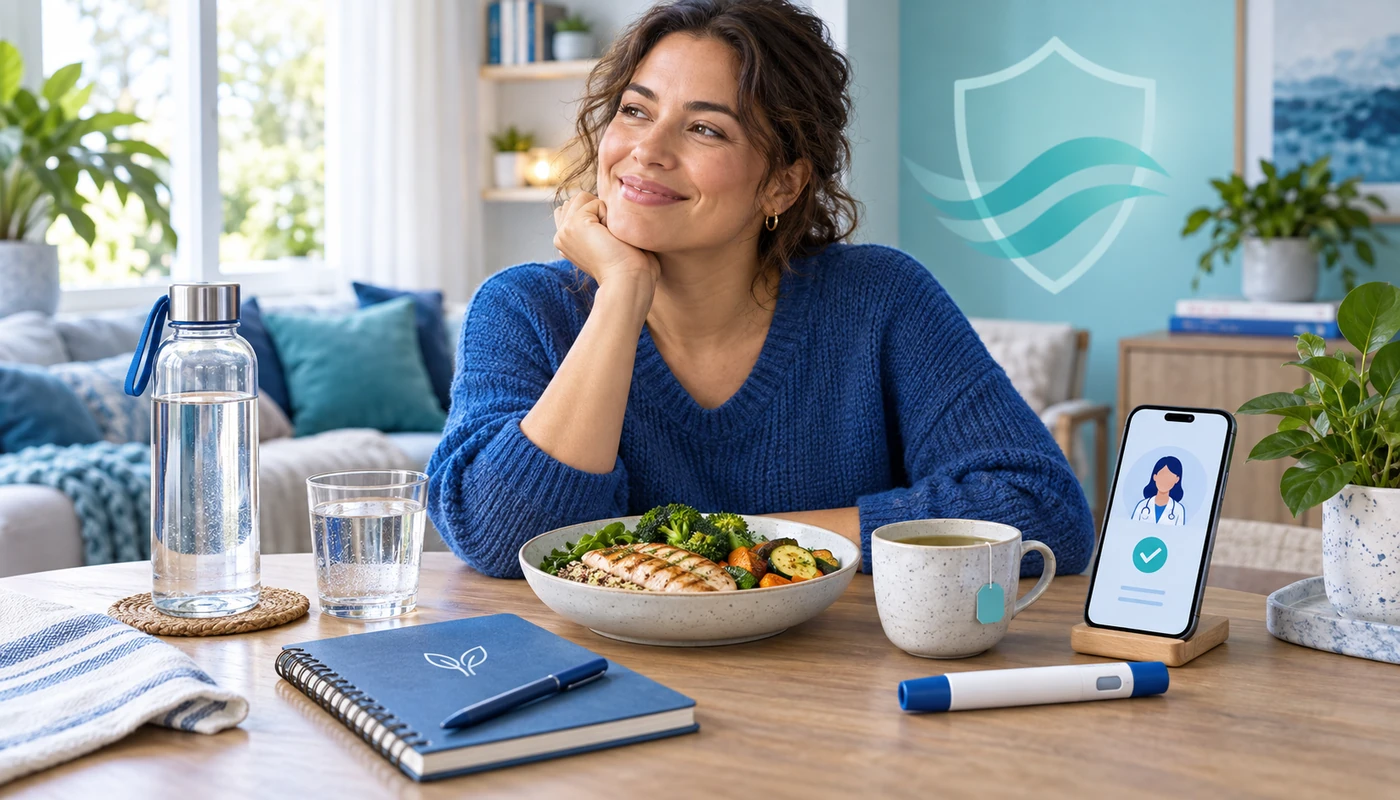
Highlights
- Common digestive changes are often most noticeable while the dose is increasing and may become easier as the body adjusts.
- Smaller meals, a comfortable eating pace, regular hydration, and simple food choices can support a smoother experience.
- Gradual dose escalation gives the body time to adapt, and your clinician can personalize the pace when needed.
- Early communication with your care team turns comfort questions into practical, confidence-building adjustments.
A comfortable GLP-1 experience begins with knowing what your body may be communicating and having a simple plan for responding. The most commonly reported side effects involve digestion, including nausea, diarrhea, vomiting, constipation, and stomach discomfort. Many people find that these changes become easier as the body adjusts.
The encouraging news is that the treatment routine itself is designed to support adaptation. GLP-1 medicines typically begin at a starter dose and increase gradually. Thoughtful meals, steady hydration, everyday movement, and an open connection with your clinician can add another layer of comfort.
Why Gradual Dosing Makes Sense
GLP-1 medicines support appetite and fullness partly by changing the pace of digestion. A gradual dosing schedule allows the body to become familiar with those signals step by step. For example, current Wegovy prescribing information uses multiweek dose stages and allows a clinician to delay an increase when additional adjustment time would be helpful.
Follow the schedule provided by your healthcare professional and invite them into the conversation early. They can help decide whether more time at the current step, a meal adjustment, or another personalized strategy would create the best experience.
Let Smaller Meals Work With Fullness
GLP-1 care can help a modest amount of food feel satisfying. Serve a comfortable portion, eat slowly, and pause as fullness develops. Several smaller meals may feel more natural than a few larger ones, especially during the opening weeks or after a dose change.
Start with nourishing, familiar foods. Eggs, yogurt, chicken, fish, tofu, rice, oats, potatoes, toast, bananas, applesauce, soup, and cooked vegetables can create simple combinations. Protein first helps protect nutrition, while a calm pace gives your body time to guide the meal.
Think gentle, gradual, and connected: comfortable portions, regular sips, steady routines, and a care team that can fine-tune the plan with you.
Make Hydration an Easy Habit
Fluids support energy, digestion, and daily wellness. Keep water nearby and take regular sips throughout the day. A reusable bottle, herbal tea, broth, or water flavored with lemon, berries, mint, or cucumber can make the routine more inviting.
Hydrating foods also count. Soups, yogurt, melons, oranges, berries, and cooked vegetables can add both fluid and nutrition. If vomiting or diarrhea occurs, frequent small sips can be especially useful, and your clinician can advise whether an electrolyte drink fits your needs.
Create a Comfortable Digestion Routine
For nausea, smaller meals and simple foods can feel reassuring. Sitting upright after eating, enjoying fresh air, and choosing cooler foods with lighter aromas may also help. A regular eating rhythm keeps nourishment arriving in manageable amounts.
For constipation, fluids, gentle daily movement, and gradually increasing fiber can work together. Oats, kiwi, berries, beans, lentils, vegetables, chia, and ground flax offer appealing choices. For loose stools, emphasize hydration and simple meals while your body settles into its new rhythm.
Your Clinician Is Part of the Comfort Plan
Keep a brief note of meal timing, hydration, dose day, and how you feel. Patterns can make provider conversations more productive and help the care team personalize recommendations. Your clinician can also review other medicines, glucose monitoring, and any over-the-counter comfort options before you use them.
A smooth GLP-1 routine is built through small adjustments, steady support, and the confidence to share what your body is telling you.
Your personalized comfort strategy
Know When Prompt Support Is the Best Next Step
Contact your healthcare professional promptly when a symptom is strong, persistent, or making hydration difficult. Severe or lasting abdominal pain, repeated vomiting, faintness, very limited urination, swelling of the face or throat, or trouble breathing call for urgent medical attention. Your medicine guide and clinician can explain the specific signs connected with your prescription and health history.
This short safety plan adds confidence because you know exactly where to turn. Most everyday comfort questions can begin with your care team, and urgent services are available when immediate help is appropriate.
Comfort Can Grow With Confidence
GLP-1 care is a partnership between proven medicine, a thoughtfully paced routine, and responsive professional support. By eating comfortable portions, prioritizing nourishment, hydrating consistently, moving gently, and communicating early, you can create an experience that feels organized and well supported.
Join our free email list below for positive GLP-1 guidance, practical comfort ideas, and provider insights that help every stage feel clearer and more manageable.
This page provides educational information only and does not provide medical advice, diagnosis, or treatment. Programs and availability may change and vary by location. Always consult a qualified healthcare professional about your own care.